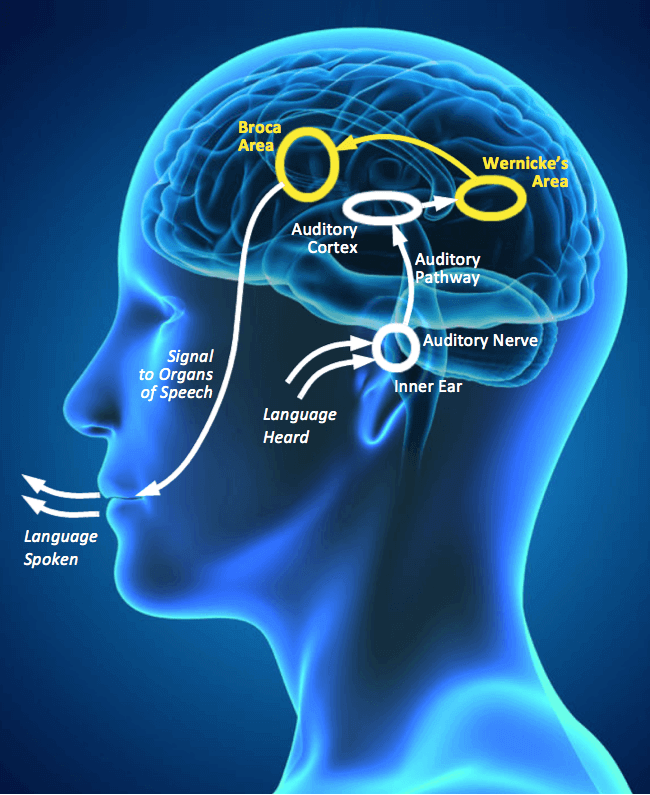
People with a Language Processing Disorder (LPD) have extra difficulties understanding language and planning the words they need to express themselves. As discussed in our recent Symptoms of Language Processing Disorder article, LPD includes symptoms such as trouble following conversation, problems with labelling or word-finding, and poor auditory memory.
Following on from the previous article, we’ll review the LPD assessment and treatment process below. Also, since at-home practice is such an important part of the treatment process, the last section of this article focuses on practical strategies you can use for yourself or your family. But first, you may wish to start by checking out the Introduction to LPD and Symptoms of LPD articles. If you would like to build a solid background understanding of Language Processing Disorder, including its aetiology (causes) and symptoms, these articles will help. Otherwise, if you’re happy to proceed, let’s get started by investigating the assessment and diagnosis process.
How Language Processing Disorder is Diagnosed
If any aspect of your (or your child’s) speech, language or general interpersonal skills are causing you concern, it helps to start by discussing it with a Speech-Language Therapist (SLT). The SLT will clarify whether or not any speech-language errors are age appropriate and, if necessary, will diagnose underlying disorders. If Language Processing Disorder is suspected after an initial discussion, the SLT will need to conduct a quite a range assessments to confirm. As an example, take a six year old who has displayed symptoms of LPD in school. Their assessment process might include the following:
- Discussion with Caregivers. The first step would be a qualitative assessment, seeking feedback from parents about the child’s speech, language, social and academic skills. Also at this stage, the SLT would be likely to consider the possibility of physical hearing loss. Questions would be asked in to learn more about the child’s social confidence, how their vocabulary is growing, their ability to use it in complete sentences and their literacy-based skills such as story generation.
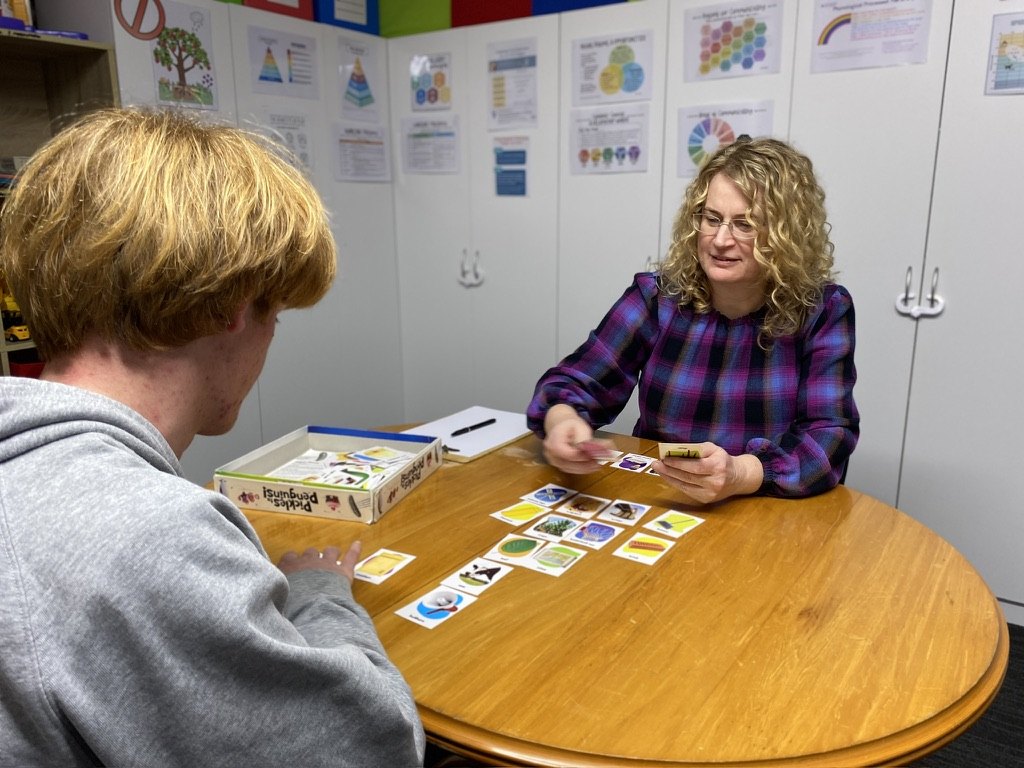
- Language Processing Assessment. The SLT will be likely to begin formal testing by specifically focussing on language processing skills, such as the child’s ability to form associations between items in a common group (such as shoes and socks), their ability to categorise items, and to identify similarities and differences.
- Supplementary Assessments. Language Processing Disorder affects several other areas of receptive and expressive communication, which the SLT would need to assess to gain a complete understanding of a client’s unique communication profile. The affected areas of communication include:
- Expressive vocabulary, especially word retrieval and labelling accuracy.
- Grammar and sentence structure.
- Short-term memory and auditory working memory.
- Receptive Language skills such as the ability to understand verbal instructions and concepts.
- Phonological awareness, which is a pre-literacy skill involving identification of the individual sounds within words.
- Speech clarity would also be assessed, as the pronunciation of longer, multi-syllabic words often becomes difficult for children with LPD.
The topics covered in an LPD assessment for adults or teens would be similar, except different standardised tests would be used for each topic. The only major addition might be a cognitive screen to gauge the extent to which an adult’s non-verbal intelligence may be affecting symptoms. After this, having worked through such a battery of assessments, the Speech-Language Therapist will have a well-rounded picture of a person’s language skills and could decide whether LPD is a suitable diagnosis.
If you or your child is struggling in class or at work, a diagnosis of LPD is immensely valuable because, at last, you or they can receive evidence-based treatment. This is what we will look at in the next section. So, let’s go ahead and delve into the details of the LPD treatment process!
Treatment of LPD
Speech-language therapy for LPD involves exercises focussed on improving the cognitive skills needed to use language. The SLT would be likely to begin with fundamental cognitive skills, such as listening comprehension, listening accuracy, short-term memory and attention. Next, following on from these foundations, an SLT would then work directly on language processing skills.
As we learn to talk during our childhood, there is a normal developmental progression of the language processing skills we acquire. Likewise, a Speech-Language Therapist essentially follows the same sequence when treating Language Processing Disorder. He or she would plan activities focussed on improving most or all of the skills below, working through the list in descending order (building basic labelling skills before working on the more advanced abilities):
- Labelling/naming.
- Identifying functions, i.e. verbs.
- Generating items which are closely associated, e.g. bed/pillow, toothbrush/toothpaste.
- Explaining the categorisation of similar items, e.g. types of food, transport or musical instruments.
- Identifying similarities and differences between different items.
- Using descriptive language, i.e. generating attributes.
- Understanding words with multiple meanings, e.g. “rose” is 1) a flower, 2) a name, 3) an action word.
- Using slang and idioms.
- Understanding metaphors/analogies.
For each of these aspects of language processing, the exercises would begin with a lot of visual aids, prompting and other assistance being provided. Then, as the individual “picks up” the skill, assistance would decrease to encourage its use in day-to-day communication.
It is important to emphasise that therapy needs to be highly customised for an individual’s age, learning style and co-morbidities. Co-morbidities may include other communication difficulties or disorders, and treatment can often be tailored to support them and LPD concurrently. For example, consider a child who struggles with phonological awareness. Helping kids build better phonological awareness improves their reading fluency and comprehension, thereby reducing one of the symptoms of Language Processing Disorder at the same time.
In addition to speech-language therapy, psychotherapy or counselling may be recommended as well. This is especially true if LPD has negatively affected a person’s social life, work and/or schooling to the extent of causing emotional or behavioural problems.
Useful Strategies For School, Home and Work
Also additional to one-on-one speech-language therapy, is the “homework” component of treatment. There can be a lot of therapeutic value in supporting the way parents and teachers interact with kids, because common activities in their day can actually be perfect opportunities to build language processing skills. Hence, your SLT will hopefully discuss helpful techniques to use with your child each day, in addition to reaching out to their teacher. There’s a lot that teachers can do to help children with Language Processing Disorder in school, so let’s start by reviewing several of these in-class ideas.
LPD Support Strategies at School
Speech therapy for children is always most effective when approached in collaboration with schools, and treating Language Processing Disorder is no different. Ideas to help LPD children at school include the use of visual aids, extra help with reading comprehension as well as a range of general communication strategies.
Use Visual Aids
- Children with Language Processing Disorder often benefit from using their visual reasoning skills to help understand tasks, and to help express their own understanding. Therefore, teachers could encourage students to practice the use of mind-mapping diagrams, drawing out the details of questions, or even using visualisation techniques to help their comprehension and recall of classroom material. They could also allow students to use visual models or projects instead of written assignments, if possible.
Extra Help with Reading:
- To help with reading comprehension, teachers might consider avoiding the overuse of words – for example, by shortening sentences or eliminating double negatives. It also helps if they break down larger reading assignments into small sections, and they may also wish to encourage the child to write a summary of what he or she is reading for better retention.
Communication Strategies:
- Here are several more strategies your child’s school teacher or teacher’s aide can do to help build stronger language processing skills:
- Ask fewer open-ended questions, so children can demonstrate knowledge without being hampered as much by word-finding difficulties.
- Break down instructions into one or two simple steps where possible.
- Speak slowly and clearly, using simple sentences to convey information.
- Allow students extra time to listen and think through their responses to spoken material. The same may be necessary for reading tasks too.
- Give kids extra time to discuss assignments with the teacher and other students if necessary.
- Where possible, avoid questions that rely on careful analysis of the language used; instead, try to focus on the essential details required for the student to show their understanding.
- Let kids know in advance of when they may be called on to give answers out loud, as it gives them a chance to prepare.
Building Language Processing Skills at Home:
These simple ideas can help your child develop and retain language skills, without applying as much pressure as he or she may encounter at school:
- Try to talk or sing with your child as much as you can. Giving him or her plenty of opportunity to practice language skills is the key to putting them on a normal developmental track.
- If your child struggles with word finding, resist the urge to finish sentences for them. This will help your child practice doing so himself and will build his confidence.
- Model proper sentence structure, without correcting. If your child mixes up words or uses improper verb tenses, simply repeat back what he or she said using the correct form, instead pointing out mistakes.
Working With LPD in Your Office:
Language Processing Disorder can make it difficult for adults to know what’s expected of them at work and can hinder communication with their colleagues. So, if you are reading this article as an adult experiencing symptoms similar to LPD, it may be helpful to try using these accommodating strategies:
- Request meeting agendas ahead of time. If you have an idea of what topics are coming, you will be less likely to be taken ‘off-guard’ by questions.
- Prepare thoroughly when giving any kind of presentations, down to your specific word-choices if possible.
- Take advantage of written correspondence where possible. Rather than approaching people’s desk, compose a well thought-out written response.
- Make use of audio recording for note taking.
- Connecting with other adults who are going through similar problems can help — they may be able to point you toward helpful resources or even just provide a listening ear.
The treatment of Language Processing Disorder can be a slow process for both children and adults. So, while therapy sessions are in progress, it’s important that you also advocate for yourself or on your child’s behalf in the places where daily life takes you. Arranging the accommodations and support strategies discussed above will not only allow daily coping while treatment takes effect, it will also speed up the treatment process!
In conclusion, I hope this second article on Language Processing Disorder has been helpful for you. One of the key take-home messages in this article is that LPD is treatable. Accordingly, with a combination of speech-language therapy and daily practice, the difficulties you or your child are experiencing will pass. If you are concerned about your child’s (or your own) language processing skills, please reach out to your local Speech-Language Therapist – there’s plenty that they can do to assist. Just as I am, I’m sure they will be happy to help!